Vancouver Island Sculpting Studio
The VIS Studio operates on the traditional, ancestral, and unceded territory of the Snuneymuxw First Nations,
and we are grateful to operate on Snuneymuxw territory.
The VIS Studio operates on the traditional, ancestral, and unceded territory of the Snuneymuxw First Nations,
and we are grateful to operate on Snuneymuxw territory.
Celebrate the season at the Christmas Art Sale 2025! Start with our opening reception on Friday, November 20, from 5 pm to 9 pm. The sale continues for two days of unique arts and crafts on November 21 and 22, from 11 am to 5 pm. Find special treasures at the Vancouver Island Sculpting Studio's Holiday Art Sale at 294 Harewood Rd in Nanaimo.
This is a great opportunity to meet talented people and see their work up close. Make your holidays brighter with handcrafted gifts from local creators, who offer a wide range of unique pieces, such as:
Created by Vancouver Island artists and artisans, perfect for your holiday shopping. Find something special at our Christmas Art Sale and create handmade memories while supporting local artists.
Check back soon for updates on the artists who will be joining us. Get ready to find one-of-a-kind gifts for everyone on your list!

We’re happy to invite you to the Third Annual Student Art Show, where you can see the amazing work our students created during the 2025-26 school year. Join us to celebrate their creativity, effort, and artistic talent.
You’ll find all kinds of art, like handmade ceramics, clay sculptures, drawings, and paintings. Each piece reflects our students’ creativity and hard work, so there’s something for everyone to enjoy, whether you love art or are just curious.
We’d love to know what you think! All visitors can vote for their favorite pieces and help cheer on our artists. Your support means a lot as they learn and share their talents with our community.
Emerging around 1890 to 1914 during the Belle Époque—the “Beautiful Era”—Art Nouveau responded to industrialization by bringing beauty, imagination, craftsmanship, and organic forms into everyday life.
For this exhibition, artists are invited to reinterpret the movement through contemporary practice. The central theme is: “To find the right balance between uniting art and nature.”Artists may work in furniture, painting, ceramics, jewellery, sculpture, textiles, illustration, installation, or any other discipline.
Art Nouveau should serve as a foundation—not a strict historical reproduction, but a starting point for personal interpretation, experimentation, and new ideas. We encourage artists to move beyond strict realism. Submitted work may be ethereal, whimsical, utopian, surreal, dreamlike, symbolic, or linked to an imagined future. We are particularly interested in flowing lines, organic shapes, plant forms, natural movement, decorative details, and the balance between realistic imagery and soft illusion.
Art Nouveau connected the human-made world with the natural world through ornament, craftsmanship, and movement. This exhibition invites artists to consider how these qualities can be reimagined today. The exhibition also acknowledges the cultural upheaval of the 1960s, when psychedelic music posters rediscovered and transformed Art Nouveau’s flowing lines, vivid colours, and imaginative compositions. Today, we are experiencing another period of transformation shaped by artificial intelligence, robotics, automation, environmental crisis, and new forms of imperialism. In response, artists are invited to imagine a more human, creative, and connected future.
———
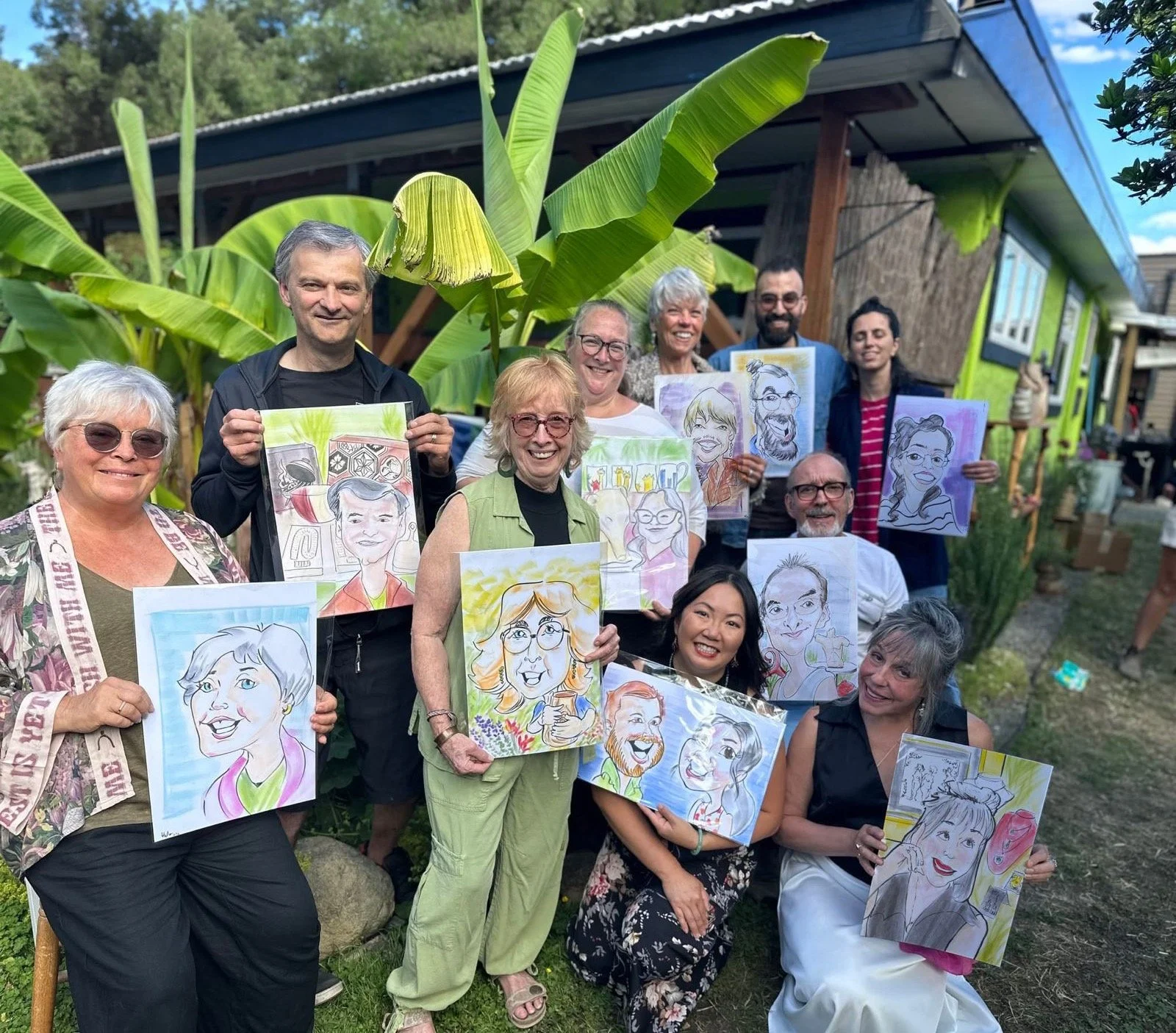
artists of the 2026 Garden Art Show
Emerging between approximately 1890 and 1914 during the Belle Époque—the “Beautiful Era”—Art Nouveau responded to rapid industrialization by bringing beauty, imagination, craftsmanship, and organic forms into everyday life.
For this exhibition, artists are invited to reinterpret the movement through their own contemporary practice. The central theme is:
Artists working in furniture, painting, ceramics, jewellery, sculpture, textiles, illustration, installation, or any other discipline are invited to submit. Use Art Nouveau as a foundation—not a strict historical reproduction, but a starting point for personal interpretation, experimentation, and contemporary ideas that connect to Vancouver Island.
We encourage artists to move beyond strict realism. Submitted work may be ethereal, whimsical, utopian, surreal, dreamlike, symbolic, or connected to an imagined future. We are particularly interested in flowing lines, organic shapes, plant forms, natural movement, decorative details, and the balance between realistic imagery and soft illusion.
Art Nouveau connected the human-made world with the natural world through ornament, craftsmanship, and movement. This exhibition invites artists to consider how these qualities can be reimagined for the present day.
The exhibition also acknowledges the cultural upheaval of the 1960s, when psychedelic music posters rediscovered and transformed Art Nouveau’s flowing lines, vivid colours, and imaginative compositions.
Today, we are experiencing another period of transformation shaped by artificial intelligence, robotics, automation, environmental crisis, and new forms of imperialism. In response, artists are invited to imagine a more human, creative, and connected future.
How can organic forms and handmade art respond to a world shaped by machines? Let us create work that is beautiful, meaningful, human, and connected to nature.
Join curator Joel Prevost and The Vancouver Island Sculpting Studio for this exhibition in April 2027.
THE FUNGUS WORKSHOP
Ready to get your hands dirty and create something truly extraordinary?
Join Joel A. Prevost for a hands-on workshop where you’ll build your own giant mushroom sculpture—about 30–42 cm (12–14 in) tall—perfect as a striking garden ornament.
Working with around 25 lb (12 kg) of clay, you’ll learn how to: build large forms using safe hollowing techniques, create rich, realistic or stylized surface textures, and explore signature tools and techniques from Joel’s mushroom series; we will use stain underglaze and stain slip. (Glazing is not included.)
This workshop is suitable for beginners and intermediate artists. No previous experience is required—just curiosity and a willingness to experiment. Participants should expect a hands-on, messy clay process and plan to work at a steady pace over the three sessions.
Sundays: October 18, October 25 & November 1 / 1:00–4:00 PM
Please arrive ready to work in comfortable clothing.
This is a special opportunity—and the Fungus Workshop will not be offered more than once a year. With only 8 spaces available, this workshop is expected to fill quickly.
https://vancouverislandsculptingstudio.com/the-fungus-workshop
Come create your own one-of-a-kind giant mushroom sculpture of your choice.